Thursday, August 30, 2007

Shoulder training for kayaking using a Bodyblade

I am currently living in snowy Sun River, Oregon where the closest paddling is a three- hour drive. I will be able to get in my boat during the winter months but a good bit of my kayaking will be replaced with skiing for the next three months. Therefore, I have decided to concentrate on an off-season training plan that will help keep me in shape for paddling. Off-season training is great because it improves performance when one is able to go paddling, reduce the time it takes one to get into paddling shape and helps reduce the chance of injury. An off-season training program can also be used as a supplemental activity during the week for a "weekend warrior."

I plan to do a series of blog entries on off-season training the next couple of months showcasing some exercises I feel are beneficial to kayakers. In no shape or form are these blog entries to be used as a rehab program. My exercise background includes a B.S. in Exercise Science/ Health and Physical Education. I am not a doctor or physical therapist. If at anytime one feels any discomfort or pain one should immediately stop and seek professional assistance.


In the future I will concentrate these, off-season training, blog entries to a particular muscle group that is used in kayaking. First off, I feel the most important aspect is to stay active. Do not be a couch potato. If one is not able to paddle, one should pick other activities that allow him/her to stay in shape and have fun. When I am not in my boat I like to ski, rollerblade, rock climb, cycle, and mountain bike. Running is a great activity to stay in shape because all one needs is a good pair of shoes. Recently I have been chopping lots of wood to prepare for the cold winter. Chopping wood is great for the core!

In session one I will talk about the shoulder because the shoulder is the most common injury amongst whitewater kayakers. I would like to introduce all kayakers to the, Bodyblade. I was introduced to the Bodyblade by a physical therapist about four years ago during rehab training. Shortly after, I was given a Bodyblade by my good German friend Sanne, and I have been using it every since. I like the Bodyblade because it is simple, compact, and easy to travel with. I will also use the Bodyblade to warm up before boating.

How does a Bodyblade work? Bodyblade is unlike any other piece of exercise equipment on the market today. Most other systems work on the principle of the user attempting to lift a weighted item or stretch an elastic band. The Bodyblade, however, works on the opposite premise: Once the ends begin to move, inertia wants to keep them in motion and it's up to you to resist. Thus, the risk of injury through overexertion is greatly reduced. This is from the Bodyblade website and you can find lots more info at www.bodyblade.com.

Bodyblade recommends using the Bodyblade 3-5 times a week. Their website has a wide range of workouts. I use a modified plan that concentrates on isolating the rotator cuff muscles that are important in stabilizing the shoulder joint. I use the Bodyblade in conjunction with a rubber band routine that I will show in my next blog entry. My daily routine takes less than thirty minutes to complete. I will do each set for a time of one minute. One can customize his/her workout by how much inertia one makes with the Bodyblade. My goal is to have a good burn at about one minute. I will do three sets of each exercise for one minute each. I alternate my right and left side. This allows one side to rest and recover while the other side is working.

If you have never seen or used a Bodyblade I will explain how to use it but I suggest going to the website and reading the manufacturer’s recommendations. The goal is to use the small muscles in the shoulder. I think of this by holding my arm straight, with no bend in the elbow. One should start with small movements from one direction to the other. The movement is a rapid, small range of motion exercise. One can pretend they are shaking a martini with a "locked" arm. To keep things simple I will explain these exercises for the right side of the body.

Warm-up
For my warm-up I will start with the Bodyblade down by my side. I start the rapid, small movements trying to isolate my shoulder joint muscles. I will slowly move my arm out in front of me and out to the side while continuing the small, rapid movement. I will go until I feel a slight burn then switch arms. After I feel a slight burn in both shoulders I will get into the exercises.


Exercise #1
One's arm position should be at shoulder height out to the side of the body. One's pointer finger should be pointing directly to ones right. One's thumb should be pointing straight ahead and the Bodyblade should be parallel to the ground. Now make small, rapid movements while holding the arm straight. In this exercise the arm movements will be an up and down motion. If one is doing this right, one will feel a burn in the rotator cuff muscles. Remember the movements are small and rapid. I do this for one minute on my right arm then my left arm. I do a total of three minutes per arm.


Exercise #2
One's arm position will be the same as exercise #1, straight out to the side with one's index finger pointing directly to the right. The difference in this exercise the thumb will be pointing towards the sky. This makes the position of the Bodyblade perpendicular to the ground. The arm movement will be a front to back motion in exercise #2. Again, complete three one-minute sets per arm.


Exercise #3
One's arm position will be at shoulder height and the index finger should be pointing straight ahead. The thumb should be pointing to the left and the Bodyblade should be parallel to the floor. The arm movement will be an up and down motion. I will complete three one-minute sets per arm.


Exercise #4
The arm position will be the same for exercise #3, straight out and in front of the body. The pointer finger should be pointing straight ahead and the thumb should be pointing straight up. The Bodyblade should be perpendicular to the floor. The movement will be a sideways, rapid, small range of motion movement.

In conclusion, I will say that form is everything. To strengthen the shoulder joint one must concentrate on isolating the rotator cuff muscles. The bottom line is one must isolate the shoulder joint while doing the exercise and move the arm in every range of motion. For variations I will do these exercises with my arm in varying angles. The Bodyblade is one of the best shoulder joint strengthening tools. Give it a try and you will find it will help reduce your chance for injury. If you are interested in learning more about the Bodyblade, check out www.bodyblade.com. For the record I am not sponsored by Bodyblade, I simply feel it is a great tool for whitewater kayakers.


If this blog entry was helpful and you would like to see more training blogs in the future please leave a comment.

Shoulder exercises for kayaking with a Thera-band

Shoulder Strengthening Using a Theraband or Resistance Band

I'm currently living in snowy Sun River, Oregon where the closest paddling is a three- hour drive. I will be able to get in my boat during the winter months but a good bit of my kayaking will be replaced with skiing for the next three months. Therefore, I have decided to concentrate on an off-season training plan that will help keep me in shape for paddling. Off-season training is great because it improves performance when one is able to go paddling, reduce the time it takes one to get into paddling shape and helps reduce the chance of injury. An off-season training program can also be used as a supplemental activity during the week for a "weekend warrior."

This session is going to concentrate on the use of a Theraband to strengthen the shoulder joint. This is to be used as a preventative maintenance measure and not designed as a rehab protocol. When using the Theraband I prefer to do this workout four to five times weekly. The Theraband is also a great tool to warm up the shoulder joint before paddling. The Theraband rubber bands come in different colors for different resistance. The yellow is the least resistance then red, green, blue and black. For preventative maintenance I recommend the black band. If one doesn't have access to a Theraband, you can also use surgical tubing, bike tubes, or anything that provides resistance. You can find yoga bands in most any department store that will work.

Resistance band exercises are designed to be high rep and low impact. Therefore, one should be doing 15+ reps for each exercise listed. If you are having trouble completing 15 reps for a particular exercise then you should choose a band with less resistance. For each exercise listed one should do 3 sets of 15+ reps per shoulder. When using the resistance bands you need to tie or fix one end and use the other end as a handle for the exercises.

Exercise #1
Internal rotation with the elbow next to the body

Your arm should be hanging directly next to your body, now bend at the elbow to make a 90-degree bend in your arm. In this position you will rotate your hand, inward, across your body. Pull the band across the body then slowly let the arm return to its original position. For best results keep the elbow glued close to the body. The idea is to have the shoulder joint doing the work, not the arm. The resistance band should be approximately the same height as your lower arm. Do three sets per shoulder of 15+ reps.


Exercise #2
External rotation with the elbow next to the body

Your arm will be in the same position as exercise #1, arm next to body with a bend in the elbow. For this exercise one will rotate the hand, outward, away from the body, keeping the elbow glued next to the body. Complete 3 sets of 15+ reps per shoulder.


Exercise #3
Abduction with arm bent 90-degrees at elbow

For this exercise you will have the same arm and band position as exercise #2. In this exercise you will allow your elbow to move away from your body while moving your arm and elbow in an upward movement. The elbow and upper arm should move upward to a 45-degree position, relative to the body. This is similar to a dumbbell fly movement. Again, complete 3 sets of 15+ reps per shoulder.


Exercise #4
Internal rotation with the elbow and shoulder at the same height (this is the throwing motion)

In this exercise you will have the resistance band tied behind you and a little higher than head height. The arm should be bent at a 90-degree angle at the elbow. One's elbow should be the same height as his/her shoulder. From this position rotate the hand forward until it is the same height as the shoulder and elbow. This is a similar motion to throwing a baseball.


Exercise #5
External rotation with the elbow and shoulder at the same height

For this exercise you will stand on one end of your resistance band. The arm should be bent at a 90-degree angle at the elbow with the elbow and shoulder at the same height. You will pull your hand, in an upward motion until your hand is directly over your elbow.


The resistance band is a great, simple, and cheap way for kayakers to strengthen their shoulder joints to improve performance and help prevent injury. These oversized rubber bands are an economical, effective, and portable. Pick one up and you can use it at home, car, work, or anywhere.

These websites are excellent shoulder strengthening websites.

http://www.limmatsharks.com/files/shoulder_strengthening.pdf

http://www.orthop.washington.edu/uw/weakshoulder/tabID__3376/ItemID__190/PageID__370/Articles/Default.aspx

http://www.usaswimming.org/USASWeb/ViewMiscArticle.aspx?TabId=445&Alias=Rainbow&Lang=en-US&mid=700&ItemId=700

http://www.bassett.org/sportsmedicine/rehabshoulder.cfm

Jay and I doing some wintertime paddling

The North Fork of the Middle Fork of the Willamette, a.k.a The Miracle Mile, is known to be one of Eugene's closest quality creek runs. Recently my good friend and paddling partner Jay Gifford and I relocated to Oregon and we are excited to sample some of the country's best whitewater. At the moment water is limited so we chose to paddle the Miracle Mile because we heard rumors that it is almost always running. The Miracle Mile is located near Westfir, OR and has some amazing scenery along with some fun, continuous whitewater. Being from North Carolina this run reminded of Big Creek without Action Alley.

Oregon is known for its lumber and gigantic trees. Oregon's creeks and rivers are no exception! The water is cold but the weather is beautiful and we were blessed with a seldom seen bluebird sunny day in the valley.


The Riot Thunder has made every river trip so far this year and has become the boat of choice at my house. The Thunder is able to jet ferry, boof, carve a line in hard whitewater, and eddy hop with the best of them. In addition, the Riot Thunder will surf, spin, and cartwheel better than anyboat in its class. I think the Thunder is the perfect boat for one who loves to playboat but is not willing to sacrifice river running ability. I am excited to put kayak instruction clients in the Thunder this coming Summer because it is stable, carves well, easy to turn, and EASY TO ROLL. While on the Miracle Mile, Jay and I decided that the Thunder was perfect for a river of this nature. The NFMF of the Willamette drops 250 ft/mile and the biggest drop is four or five feet high. Due to the Thunder's planing hull design, it was able to boof a ledge and quickly eddy out, in the smallest eddies, before the next drop. Here's Jay boofing the Thunder.

The Riot Magnum is sweet. If you have paddled the Magnum then you known what a great boat it is. If you are not satisfied with your current creek boat situation then take the Magnum for a test drive. It will speak for itself.

Yours truly boofing the Riot Magnum on the NFMF of the Willamette. This boat is super easy to boof.


Happy Winter Time Paddling. Let's paddle sometime, Jason Aytes

Riot Magnum is a great choice for overnight trips

Recently I had two friends from Montana come out to Oregon for a little spring break kayaking trip. We decided to travel south and paddle the Illinois River. The stretch we paddled was a thirty-three mile stretch and we did it as an overnighter. I'm planning on doing some California overnighters this summer so I was eager to try out the Magnum as an overnighter creek boat. As you can tell I didn't hold back on gear for this trip. I was able to fit all this in my boat and the Magnum paddled good as ever.

A list of what went inside the Magnum:
Two person tent, therma rest, two Watershed Chattooga dry bags, one Watershed Ocoee dry bag, Aquabound break down paddle, sleeping bag, and a water filtration unit. I purposely packed way more than I needed to get a feel for how the Magnum would preform under these conditions. I was able to store all this in the stern and in my lap. I didn't even bother with bow storage. The boat paddled wonderful too!


The Riot Magnum's storage system is as good as any kayak I have seen. The backband is designed to lay down or be completely removed to allow major access to the stern. I was able to fit two Watershed Chattooga drybags, a break down paddle, and a tent behind the seat without removing the backband. Laying the backband down like this takes about five seconds. It's a wonderful design.


My favorite part of overnights is hanging out with my friends at camp and knowing that you can kakak the next morning without driving anywhere.


We didn't get any photos from this run but we did score a bit of video and I'll post it later. If you are looking for a creekboat and planning on doing overnighters I would highly suggest taking the Magnum for a test drive.

-J. Aytes

Tuesday, May 15, 2007

Breitenbush River and Hot Springs

The Breitenbush River is Located about half way between Portland and Bend, near a small town named Detroit. The Breitenbush River has a big bonus, there are wonderful hot springs just upstream of the put-in. These are some of the nicest hot springs I've ever been too. They are private hot springs you can access through the Breitenbush Retreat and Conference Center. You can check them out at Breitenbush.com.


The river runs mostly in the spring time and is about ten miles of continous class III-IV whitewater. The river starts with a canyon rapid that includes a five foot boof followed by a narrow chute for the exit. This was my personal favorite rapid on the run. If you make a run down the Breitenbush be on the lookout for log jams. The river is a class III-IV river but has two Class VI log jams that could pose a problem for groups paddling on the cusp of their ability. It is best to scout from the road and know where the wood is located because you will paddling into them quickly if you aren't looking for them.


Hope to see you at the Upper Clackamas River Festival for some Karaoke. www.upperclackamasfestival.org

-J. Aytes

Wednesday, March 14, 2007

Pimp My Ride: Bulkhead for Creeking

Spring is here in Oregon and the rivers are starting to run. I recently built a new bulkhead for my Magnum and wanted to share my ideas with everyone in cyberspace. There are two main things I look for in a bulk head, shock absorption and a comfortable shape.

The style I'm using is placing little columns of foam, which serve as shock absorbers, in the bulk head. This is a variation of the popular waffle cone bulkhead. As a general rule, more mine cell foam is better than less mini cell foam. I use two solid pieces of foam in my bulkhead, like those that come with Riot kayaks. Most kayak companies now days include a piece of foam that is to be used as the bulkhead. In between the two solid pieces of foam I place many little columns of foam that will serve as the shock absorbers.


A comfortable bulkhead is shaped so that the area where one's heels are located is larger than where one's toes will go. This will create more surface area for your feet to rest against. This shape will be more comfortable and also help with performance because the entire foot will be in contact with the bulk head vs. pressing against the bulkhead with only your toes.

How do you build the bulkhead? For starters gather up all extra foam laying around. A bulk head is more about function and less about fashion. You can get away with using scrap pieces or used pieces of foam. Second, find a solid piece of foam or several smaller pieces that you can make a solid piece out of. This will be the piece that is closest to the bow of the boat. Place this piece inside the boat. Next, you will take all your scrap pieces and shape/cut them into columns 1" square shapes. I like to vary the height of the columns so I can achieve the final shape I'm looking for. For example I will cut two pieces that are three inches tall. These two pieces will go directly underneath the arch of my foot. I will cut four one inch tall pieces that will be placed in the area of my toes. Then I will cut lots of two inch pieces to take up the rest of the space. Next, it is time to glue your columns onto the solid piece of foam that is outside your boat. You will be gluing the foam columns on the opposite side of where your feet will go. After the glue has dried you are ready to place the remaining two pieces of foam inside you kayak. I prefer to shape the foam so that it fits inside the boat perfect therefore I can get away without gluing this last piece. This allows me to have access to my bow for overnight storage, or transfer the bulkhead to another boat.

Key Points:

-More foam is better.
-Think shock absorption.
-Shape the bulkhead so that it fits the entire foot not just the toes. (longer at the bottom and shorter at the top. You can sit in the floor and place your feet like you were kayaking. Find a comfortable position and give your bulk head a custom fit.)
-Make sure there is no room in between the top of the bulk head and the top of the boat. The same is true for the bottom of the bulk head and the bottom of the kayak. Making sure the bulkhead is touching the boat at the top and bottom will keep your feet from painfully sliding past the bulk head in case of a piton. This is important!

Pitoning is part of creek boating and having a properly fit and heavy duty bulk head can help prevent the chance of injury. Take the time to outfit a good bulk head and you will love it. It is more comfortable, safer, and helps with boat performance. Hope to see you on the river. If you are in the market for a creek boat you must demo the Magnum.

Wednesday, January 31, 2007

Settling into Oregon

Beautiful skies ahead as Jay and I travel from North Carolina to Bend, Oregon. The skyline here in Oregon is awesome and Oregon has some awesome sunrises and sunsets.


Here is a photo of our snowy hide-a-way for the winter. Jay and I are enjoying this log cabin. Did I mention it has a hot tub? The compound has one main cabin and another cabin that is similiar to a studio apartment. We also have a little wood working area that we use for storage and a big wood shed. The national forest boundary is only about 50ft away from the cabin.


A snow hut that Jay and I made. Jay had the design idea and now all we need is more snow. We built this thing when we first got here thinking we would have lots of snow. Mt Bachelor has gotten a good amount of snow however the "snow" hut could use another dump or two.


We have a wood burning stove and have been chopping lots of firewood. It is better than a gym membership. Jay and I have found out that if you have a wood burning stove you will stay in shape. We chop wood a couple of afternoons a week.


One of the many snowy days at Mt Bachelor. We had lots of early season snow but recently we have been having blue bird days.


Two of our new friends from Brazil who are living here for the winter.


Hannah waiting to shred the slopes at Mt Bachelor on a blue bird day.

Back in the Saddle Again

The North Fork of the Middle Fork of the Willamette, a.k.a The Miracle Mile, is known to be one of Eugene's closest quality creek runs. Recently Jay and I relocated to Oregon and we are excited to sample some of the country's best whitewater. At the moment water is limited so we chose to paddle the Miracle Mile because we heard rumors that it is almost always running. The Miracle Mile is located near Westfir, OR and has some amazing scenery along with some fun, continuous whitewater. Being from North Carolina this run reminded of Big Creek without Action Alley.

Oregon is known for its lumber and gigantic trees. Oregon's creeks and rivers are no exception! The water is cold but the weather is beautiful and we were blessed with a seldom seen bluebird sunny day in the valley.


Jay gave the Thunder a test drive today. Here he is boofing one of the many ledges. The river was steep but the largest drop was probably four feet.


Yours truly boofing the Riot Magnum on the NFMF of the Willamette. The river was full of chutes and little channels with cool boofs like this one.


Happy Winter Time Paddling.

Thursday, June 15, 2006

Kayaking with Tunes


I just got an H2O Audio waterproof ipod holder. Now I can listen to music while kayaking. It's real nice!

Kayaking High School Cleans up at Golden Rodeo


Yesterday Team Huge attended the Golden Rodeo event at the Clear Creek Play Park in Golden Colorado. This event is a series of rodeos that take place every Wednesday for six weeks straight. I was amazed at the organization of the event, the spectator turnout, and the talented kayaking community here in the city of Golden.

This competition included a rodeo and a boater-cross team event. Team Huge had five competitors in the rodeo and everyone participated in the boater-cross. The boater-cross included a short flat water sprint, then a run across a field up some stairs then racing back down twisting slides, then finished off with a down river paddle through the Golden Whitewater Park. This event can be summed up with one word, FUN!

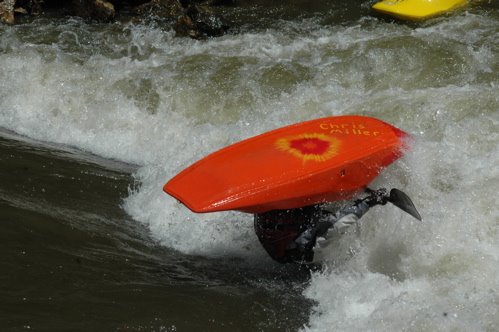
In the rodeo Team Huge had a good showing. In the junior class Huge took first, second, and third out of an extremely talented field. Golden has a handful of talented juniors who was contenders and can “throw down.” Third place went to local hero Zach Mitchell who is leading the Golden Series point race. Alex Mohn found himself in second and threw one of the few trophy moves of the event, a McNasty. First place went to up and coming fifteen year old Chris Miller from Maryville, TN. Chris has traveled with the school for the past year and was awarded the most improved paddler at the end of this previous school year. Not only did Chris win the juniors but he also took first place in a talented Men’s expert class. Chris’ rides included cartwheels both ways, loops, air flips, and space godzillas.

Photo by: Jason Aytes

Colorado Tour 06

I have found myself in Colorado and neighboring states again this summer touring with The Academy of Huge Experiences. I’m co-leading the trip with Spencer Cooke and we are accompanied by talented team of junior athletes. Due to Colorado’s awesome play and guaranteed water Colorado is a world known destination for kayakers during summer months. Some of the places we’ll be traveling include: Clear Creek Park-N-Play near Denver; Salida for Fibark, and other local runs on the Arkansas River; Jackson Hole Wyoming and the great surf on the Snake River, Montrose Colorado and the famous Montrose wave; and many more.

The past couple of days we have been based around Evergreen Colorado and staying with the Mitchell Family. I would like to give a big thanks to the Mitchell Family for hosting eleven kayakers in their comfortable, mountain home. Zach Mitchell has shown us his local gems of play spots and we have had three days of amazing play boating.


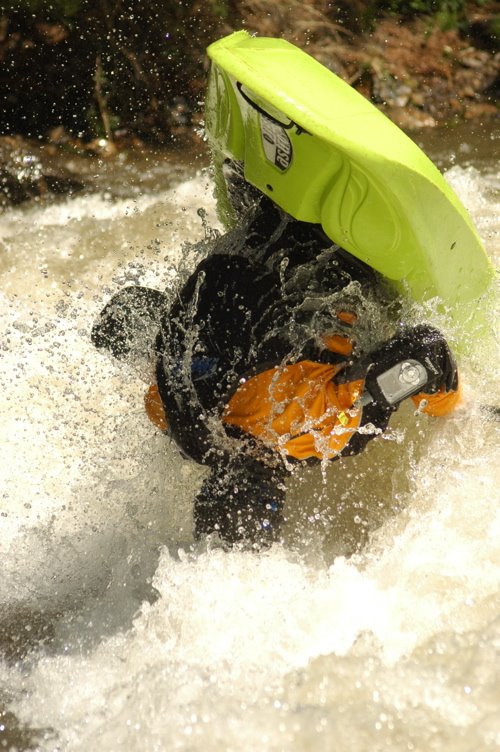
Photo by: Chris Miller

The New River Academy Graduation

School's out and the graduation ceremony was elegant. Here's a picture of my co-workers and me. These guys were great to work with and really made work an enjoyable experience.
Pictured from Right to left: Jason Aytes, Scott Wooten, Mark Przybysz, and Hutch Brown.

Huge Experiences Tours Washington D.C.

The school year has come to an end and summer break has begun. The New River Academy of Huge Experiences finished the school year by taking a tour of our nation’s capital. In Washington D.C we witnessed war protest and an Iraq War memorial that was displayed in the mall. The war memorial had one pair of boots on the ground for every American life loss during the war. A shocking reality, here is a photo.


The school also had the chance to visit a D.C fire hall and we got a V.I.P tour from Dennis, a friend of English teacher Scott Wooten. The fire hall was an awesome time and we able to slide down the fireman pole. Yipp-eee!


Friday, April 21, 2006

Riot Magnum Review

General Info:
Kayaker-
Weight: 155 I’m a little light for the suggested weight however the boat feels like it fits perfect.
Height: 5’9”
Shoe Size: US 10 more than enough room for my feet.

Kayak- www.riotkayaks.com
Length: 7’11”
Volume: 72 gallons
Weight: 39lbs
Width: 26”


I received my Magnum almost one month ago and have had a chance to paddle it on a variety of whitewater now. I gave it a test run on the Green River Narrows, Cheoah, Waterfalls at Rock Island and Tallulah. Overall this is the best creek boat I have ever paddled, here’s why.

Outfitting:
The Magnum is complete with Riot’s simple yet effective outfitting system. The 2006 thigh hooks are nice and are complemented with foam knee blocks to place between the kayak and your knees. The seat can be adjusted in less than one minute and requires no tools. The back-band is a ratcheting design and the most comfortable back-band I have ever used. The best feature with the back-band system is if the ratcheting system has mechanical failure you can bypass it with a cam strap buckle that is on the back on the back-band. This insures that you won’t be stuck on a wilderness creek without a back-band that works. The back-band is designed so it can be removed in the need storing gear in the stern for self-supported trips. The stern has heaps of room for self-support overnighters. Both the back-band and seat come padded out for the uppermost comfort. The bulkhead is adjustable and comes with a one-inch piece of foam. I used this foam and added a couple of other pieces to it to beef up the piton capability. Behind the seat are two rope tie-off points to store a throw bag or safety kit. The only thing that I would change with the Magnum’s outfitting is adding a water bottle holder/ throw rope holder in front of the seat. I did this myself by drilling two small holes in the front center pillar and inserting two small pieces of plastic pipe, for bushings, and rope. This system works great and you always have your throw bag where you can quickly grab it if needed.

Design:
The Magnum’s hull is unlike any other creek boat. The hull from the seat to the bow is somewhat of a displacement design. This is nice for rock boofs as you can still navigate your bow after the boat is in contact with the rock. From the seat back near the stern of the boat the hull flattens out and has more aggressive edges. This is great for carving turns and surfing out of hydraulics if need be. The hull has the slightest shallow V design which helps the boat track and gives it the most speed for a boat of its length. The stern of the boat is a square design that is used to load the stern for punching holes and shooting out the downstream side. The Magnum comes with four sturdy grab-loops that are comfortable for carrying and strong enough for an extraction. There is also a security bar if needed to lock the boat when not in use.

Performance:
The Magnum is easy to paddle compared to other creek boats. Thanks to its edges it carves in and out of eddies similar to a play boat. The Magnum is surprisingly fast for a boat it’s length. Head to head it is one of the faster boats on the market. It accelerates on edge and has good speed when paddling downstream too. Oh yeah, and it surfs great too, no reason not to surf it up a bit in the creek boat.

Boofing/ Jumping:
The Magnum’s bow rocker and squared off stern makes boofing an easy task. The front of the boat has a rounded, traditional hull that makes it possible to drive high onto rocks and one is still able to adjust the boat’s angle. Before paddling the Magnum I was a little worried about how the edges would affect its boofing ability in the situation of a rock boof. I found the boat would drive onto rocks and slide off with ease. Rock boofs, water boofs, fades, or slopers the Magnum’s nose stays on top of the water.

Slides:
The Magnum is great on slides because one can continue to adjust the boat’s angle while bouncing down the slide. This was a concern before paddling the boat because of the boat’s edges. In the past this is the problem I have found in creek boats that have edges. One thing I noticed was the more the boat pointed downstream the easier it was to change the boat’s angle. If the boat turned to ninety degrees, nine or three o-clock, it was harder to turn it back to a twelve o-clock angle. After several runs down the Green and Oceana I feel good about paddling big slides in the Magnum.

Waterfalls:
While at Rock Island recently the lake was spilling, which means the waterfalls were running, and I had the opportunity to paddle the Magnum off of Mill Side and the Spout. Mill Side was a little bit low but I decided to do it anyway. The lip was shallow and I knew it was going to be hard to set my angle. I was thinking worse case scenario I would pitch pole and practice landing on my head. While going off I was waiting for a late stroke and my boat hopped off of the rock and I landed flat without taking a stroke. Ouch, note to self, too low! Next, I paddled over to the Spout and it was the perfect level. My friends and I ran laps on the Spout for the rest of the afternoon. The Spout is a picture perfect waterfall and the perfect place to practice waterfall technique. All afternoon we practiced entering the water at different angles and trying different styles. What I found was that no matter what I did at the top of the waterfall the Magnum was going to surface in control, balanced, and up right.

Big water:
I haven’t had the chance to paddle the Magnum in big water yet (due to our little drought here in the SE) but I feel confident it will perform well. The boat is maneuverable, fast, and has the ability to carve through pushy water. More later…

Conclusion:
I am enjoying the Magnum. There are three things I look for in a creek boat: I want a boat that I feel is safe. I want a boat that is comfortable with lots of room for gear. And of course I want the boat to be fun. The Magnum meets all of my needs. Most creek boats I have paddled in the past have been just fine but I wouldn’t say fun. The Magnum is more fun because it is maneuverable, fast, and I don’t feel an adjustment period when switching from my play boat to my creek boat. I hope this review gives you an idea of the Magnum but truth is you can’t tell much from a silly little review. Give the Magnum a test drive and I think you’ll find it to be a great boat. See you on the river!

Jason Aytes
The Academy of Huge Experiences
Nantahala Outdoor Center Lead Instructor

Wednesday, April 05, 2006

El Rio Verde Y Scout


After returning to the U.S and Spring temps in the air my good friend Ryan Sherby aka Scout and I traveled to the Green River. At the put-in we realized it had been over two years since we had paddled the Green together. We had a wonderful day and it was good to be back on El Rio Verde. Here are a couple of photos I took of Ryan running the race line at Frankenstein and in the boogy water just down stream.